📜 Curated collection

Marketing Classics Every Marketer Should Read

The books from before 2000 that still shape how great marketers think.

16 books, ranked by our editors. Updated November 2026. How we rank

As an Amazon Associate we earn from qualifying purchases. Links to Amazon on this site are affiliate links, which means we may earn a small commission at no extra cost to you. Learn more

#1

Influence

Robert B. Cialdini ·1984 ·All levels

4.9

The essential book on persuasion. Cialdini explains the principles that lead people to say yes, including reciprocity, social proof, authority, liking, scarcity and commitment.

  • Give first to trigger reciprocity
  • Social proof is strongest from similar people
  • Use scarcity and authority honestly

Best for: Every marketer, salesperson and founder

#2

Positioning

Al Ries and Jack Trout ·1981 ·All levels

4.9

The book that made "positioning" part of every marketer's vocabulary. Ries and Trout argue that you win by owning one simple idea in the prospect's mind, not by being better on paper.

  • Being first in the mind beats being better in the market
  • Position against the leader when you cannot be the leader
  • Simple, focused messages cut through an overcommunicated world

Best for: Anyone who needs their brand to own a clear place in the customer's mind

#5

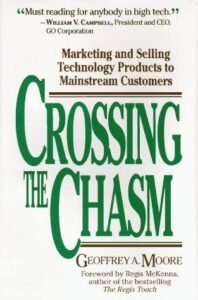
Crossing the Chasm

Geoffrey A. Moore ·1991 ·Intermediate

4.5

Moore explains the gap between visionary early adopters and pragmatic mainstream buyers, and why so many promising products die in it. His beachhead strategy is still the standard playbook.

  • Early adopters and the early majority buy for different reasons
  • Win one narrow beachhead segment first
  • Pragmatists need references and a whole product

Best for: Tech and B2B teams moving from early adopters to the mainstream

#6

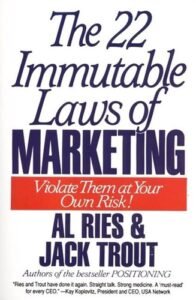
The 22 Immutable Laws of Marketing

Al Ries and Jack Trout ·1993 ·Beginner

4.5

Twenty two short, punchy rules about leadership, categories, focus and line extensions. Some examples have aged, but the core logic still explains why many brands win or stall.

  • If you cannot be first in a category, create a new one
  • Line extensions usually weaken a strong brand
  • Focus on one word you can own

Best for: A fast, opinionated primer on marketing strategy

#8

Confessions of an Advertising Man

David Ogilvy ·1963 ·All levels

4.4

Ogilvy's witty memoir on how to run an agency, win clients and create campaigns that sell. A fast, charming read full of practical lessons.

  • Great campaigns start with homework on the product
  • Hire people who are better than you
  • If it does not sell, it is not creative

Best for: Readers who want the story and philosophy behind modern advertising

#10

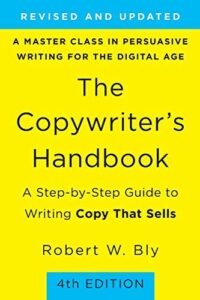
The Copywriter’s Handbook

Robert W. Bly ·1985 ·Beginner

4.4

A clear, practical manual covering headlines, body copy, features versus benefits and writing for different media. Updated through several editions.

  • Lead with benefits, back them with features
  • Write headlines that get attention and qualify the reader
  • Clear and simple beats clever

Best for: New copywriters and marketers who write their own copy

#12

Building Strong Brands

David A. Aaker ·1996 ·Advanced

4.3

Aaker's classic introduces the brand identity system and lays out how to build and measure brand equity. Academic in tone but deeply influential.

  • Brand identity goes beyond product attributes
  • Think of the brand as a product, organization, person and symbol
  • Measure brand equity across multiple dimensions

Best for: Brand managers who want a rigorous model of brand equity

#13

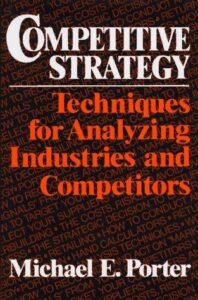
Competitive Strategy

Michael E. Porter ·1980 ·Advanced

4.2

The classic text that introduced the five forces and generic strategies. Dense but foundational for understanding why some markets are profitable and others are not.

  • Five forces shape industry profitability
  • Choose cost leadership, differentiation or focus
  • Stuck in the middle is a dangerous place

Best for: Strategists and MBA level readers who want the foundations

#15

Marketing Warfare

Al Ries and Jack Trout ·1986 ·Intermediate

4.2

Ries and Trout apply military strategy to marketing: defensive, offensive, flanking and guerrilla warfare. A memorable framework for choosing a competitive strategy based on your position.

  • Only the leader should play defense
  • Attack the weakness in the leader's strength
  • Small players win with guerrilla focus

Best for: Strategists thinking about competitors

More collections

Free weekly newsletter: The Weekly Read

One great marketing book, every week

Get one book worth reading plus the three ideas to steal from it. Five minutes a week.

🎁 Free when you join: 50 Big Ideas from 50 Marketing Books (PDF)

One email every Tuesday. No spam, unsubscribe anytime. Privacy policy